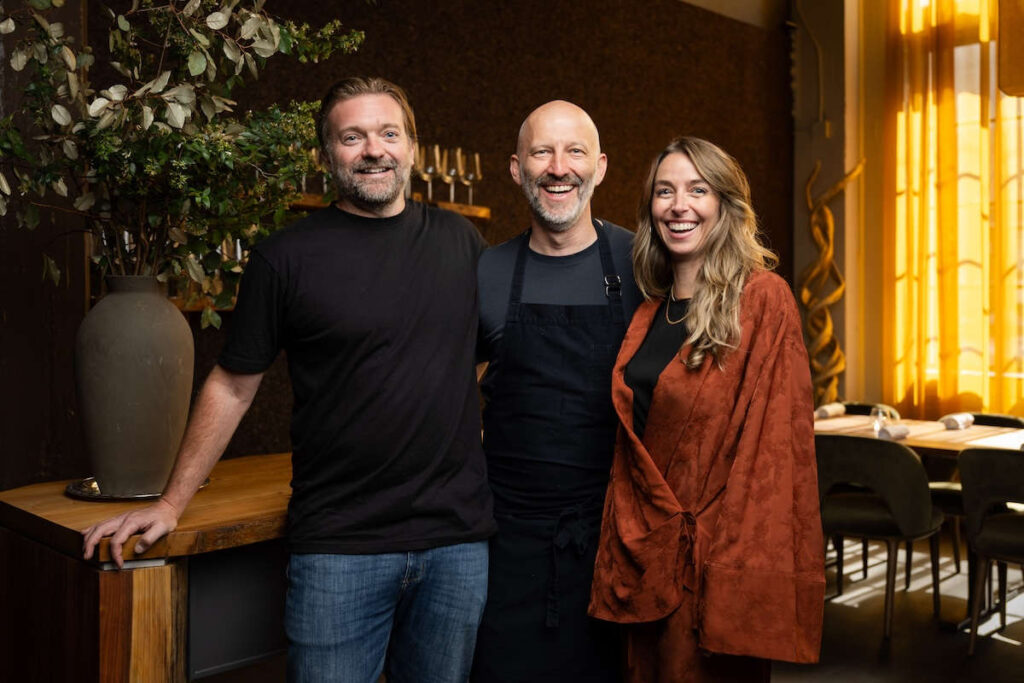

Wolfsbane is an herb and a poison. It’s also the name of Rupert and Carrie Blease’s new restaurant. When I spoke with Rupert Blease, the chef explained why he, his wife and their co-founder, Tommy Halvorson, chose the name. “In folklore, it was planted around villages to keep wolves at bay,” he said. “When you walk through our door, down the hallway, then you’re in a place that’s there to welcome and look after you.” The toxins that infiltrate our daily lives are meant to remain on the other side of the restaurant’s enchanted front door.
Inside, branches of trees are “planted” above the dining room. They add to the atmospherics by summoning up a production of A Midsummer Night’s Dream. There are open-walled platforms high above eye-level that incorporate mini-forests of climbing and entangled limbs. They are lit up to emphasize their greenness, which corresponds with the fulsomeness of the even greener wall color. It’s staged but not stagey. The design sets a bucolic tone, but the menu completes the thought, delivering on such a verdant and alluring premise.
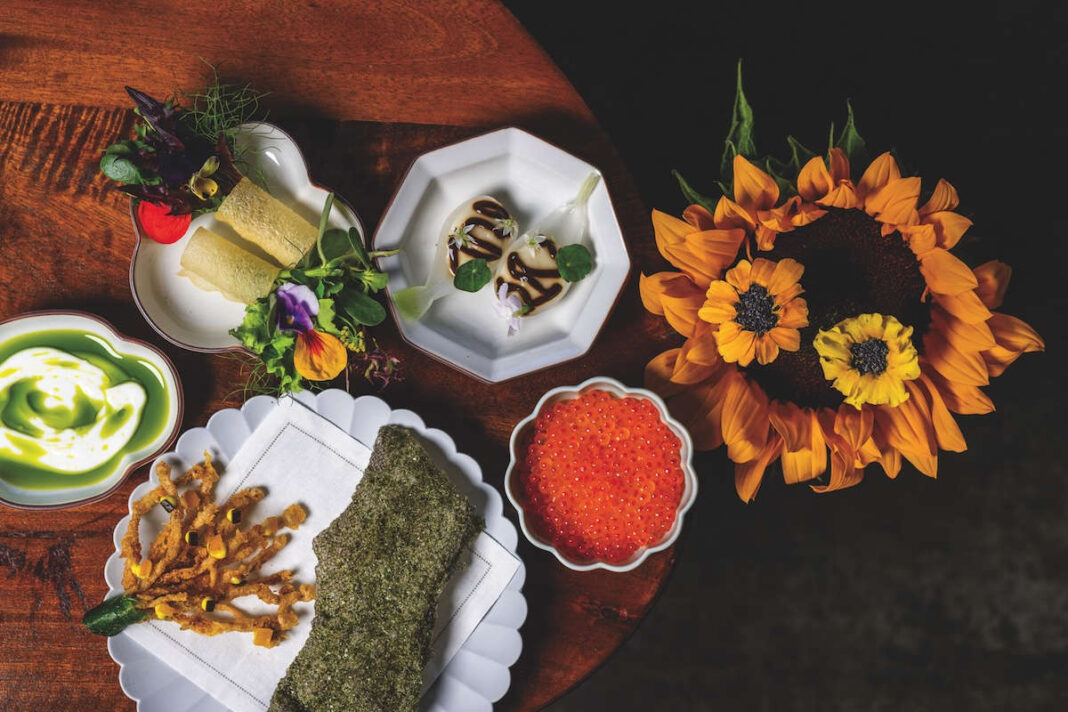
Almost universally, the plating incorporates leaves and flowers. The whimsical names of menu dishes—such as “petals,” “potato salad” and “tartine”—defy expectations when they arrive at the table. The entry for petals ($6) lists allium, onion blossom, black garlic. My imagination didn’t anticipate four translucent onion skins containing tiny pink pools drizzled with black garlic and topped with purple allium blossoms. Peaseblossom, Cobweb, Moth and Mustardseed would be delighted with the delicacy and pretty precision of the plating.
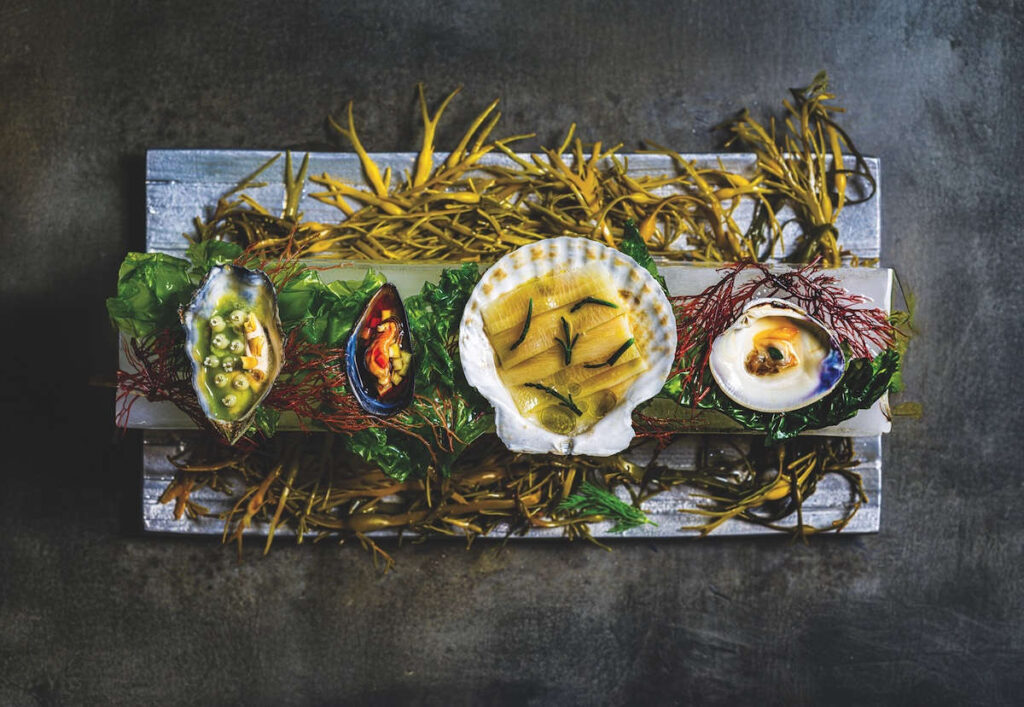
Blease’s minimalism is as painterly and contained as a skilled watercolorist’s. Each daub of color is suggestive. Together, the colors contribute to a coherent image on the plate. Flavor-wise, the chef chooses one hero spice for each bite. A madras curry powder dominates “eryngii,” served with a side dipping bowl of wheat berries and lemon curd ($8). The trumpet mushrooms are treated the way that Cleopatra was, bathed in luxurious oils. They’re served, or rather, stabbed with the stem of a small leafy shrub. This is a transportive way of eating; it summons up a pagan past when people were connected to nature rather than technology.
“You want things to be very crisp and light, and at the same time a little bit intense because you’re only going to have a couple of bites,” Blease said. “Also visually, you want things to be really pretty and fresh. The sunflower with the artichoke just reminds me of my youth, and I love flowers.” The element of sharpness comes through with different vinegars and acidity. “They help bring out the flavors that really match the cocktails, the wine or the non-alcoholic pairings that you’re going to have,” he added.
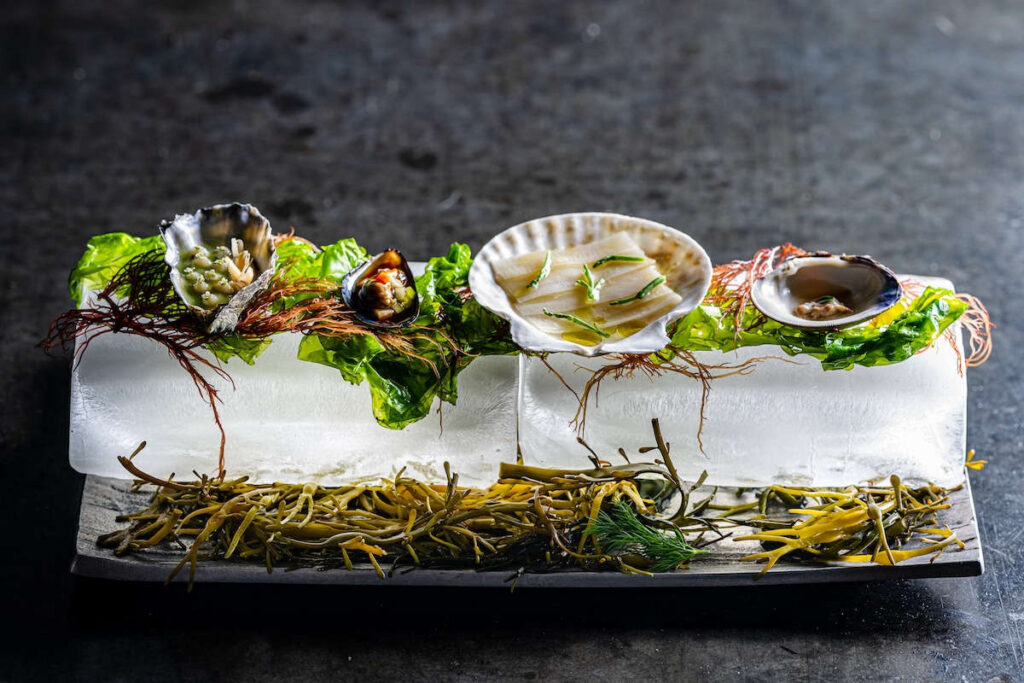
Wolfsbane offers two menus, one with bar snacks or a tasting menu with appetizers and entrées. The progression of the tasting menu favors, the chef suggests, a subtler progression of flavors. He noted, “But when you have them as individual snacks—that don’t necessarily have a continuation—you just want each bite to have a nice impact.”
Described simply as wild leaves and herbs, house yogurt and nasturtium, potato salad ($5) is definitely not what it sounds like. Blease’s first idea for the dish was to make something fresh, crispy and crunchy. He posed the question: “How can you wrap salad in something that’s not going to be too picky for the guests to eat?”
The chef took inspiration from a cucumber salad made with yogurt and mint. Long-stemmed leaves fan out of crisp potato chips formed into the shape of a cylinder. To match those leaves, a midnight green nasturtium oil swirls around a large dollop of yogurt. “I don’t really like nasturtium petals, but the larger leaves make a really lovely oil,” he said. Blease gently blanches the leaves and blends them with a bland, neutral oil, “because you want the flavor of the nasturtium to pop through as much as possible.”
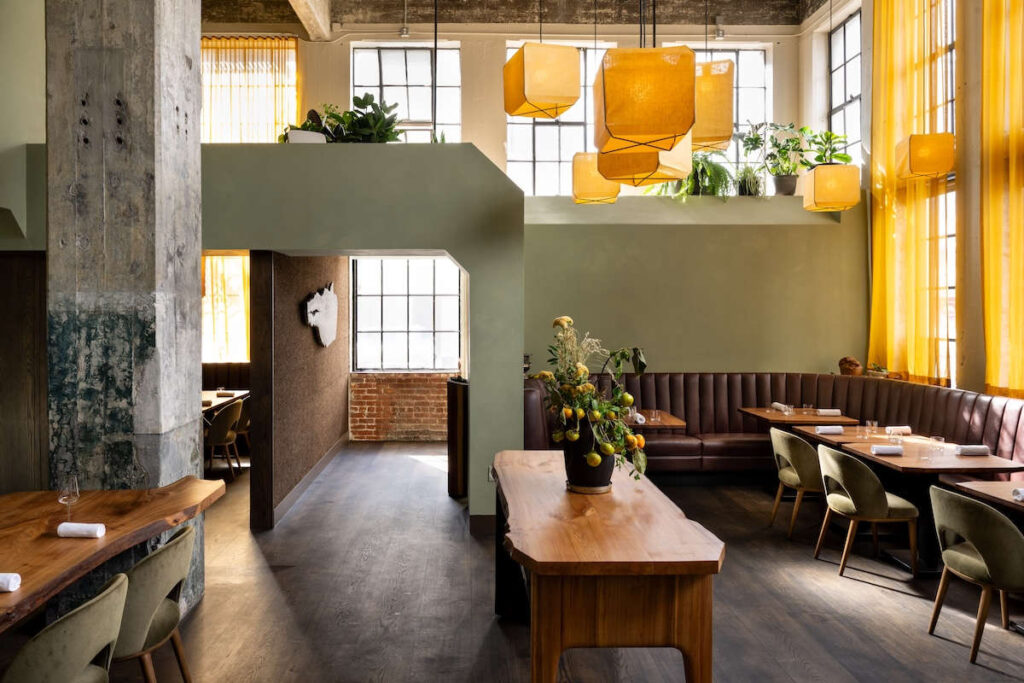
Wine director Louisa Smith held the same position at the team’s previous project, Lord Stanley. “We think about the wine program in the same way we think about the food,” Blease said. Wolfsbane only buys wine from organic or biodynamic ancestral modes of winemaking. He described the wines as “crisp, bright, maybe a little bit younger, and they’re suited to go with food.” Big Bordeaux or cabernets would overpower some of the dishes.
After several snacks, we ended our meal with an inventive rhubarb custard infused with red shiso and finished with pistachios and microgreens. Blease said, “The dessert makes you feel like a kid; those textures and flavors I always think are reminiscent of youth.” Two decades into his career, the chef considers the food at Wolfsbane to be more intimate and more imaginative than what’s come before. He noted, “All the dishes that we’re putting on at Wolfsbane, they haven’t been done anywhere else, and they won’t be done anywhere else.”
Wolfsbane, open Tue to Sat 5:30–10pm, 2495 Third St., San Francisco, wolfsbanesf.com.