
Motherhood does not automatically cause a person to become an entrepreneur. But in Cassie Ye’s case, it did. In 2014, she founded her company, Stelle. The year was a big one. The birth of identical twin girls meant Ye; her husband, Joey Jia; and their first daughter were now a family of five.
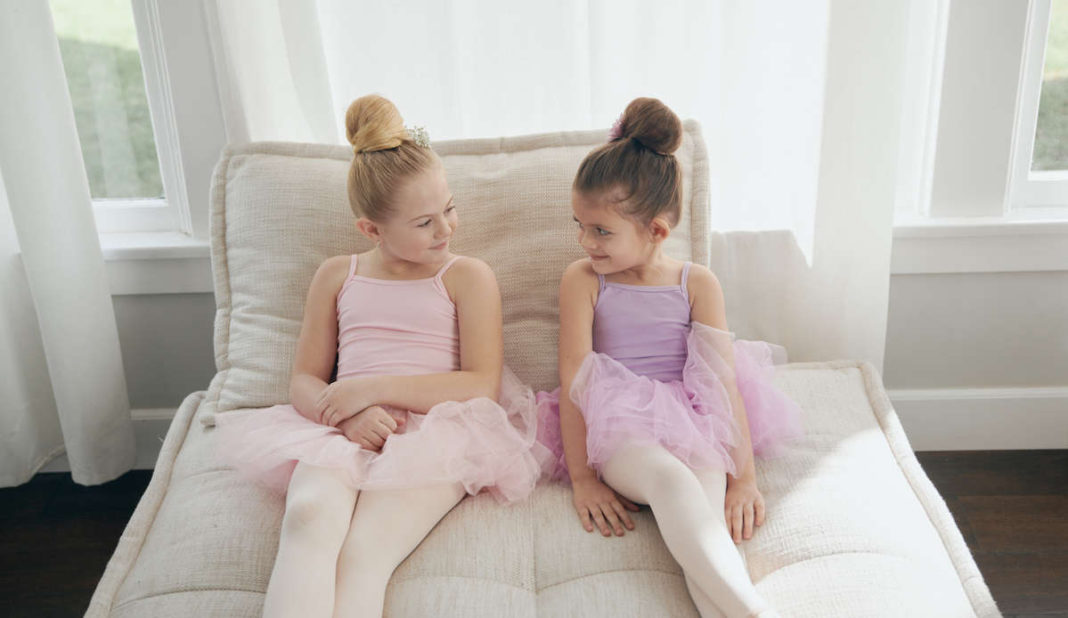
With a Ph.D. in pharmaceutical chemistry from the University of Utah and a B.S. in polymer science from Fudan University, Ye wasn’t content to simply be a stay-at-home mom. After the couple’s oldest daughter began studying ballet, Ye developed and launched Stelle to produce dancewear for kids.
Headquartered in Hayward, Stelle in the early years sold dance tights, leotards, tutus, practice skirts and shoes. The company quickly added softball clothing when her daughter’s interests shifted, followed by a full line of kids’ apparel and activewear for women. Working out of her San Mateo home’s garage, Ye jumped into the retail industry full force.
“I chose high-quality vendors, built my team one-by-one and did a little of everything,” says Ye. “We started selling on Amazon, which was a good place to start a small business. They provided all the packaging, sales fulfillment, tracking returns, everything. My garage was like a warehouse center. We shipped things after repackaging them, repaired returns, resold never-worn items in original packaging. Later, we added our own designs.”
Ye’s background in science and the discipline necessary to earn a doctorate translated into vital business strengths. “My Ph.D. training had a profound influence,” she notes. “You start from one piece of paper, design experiments, do research, do repeated testing. You’re building something from nothing.”
Most startups find seed investors, using the early funds to rapidly develop a business. “We—my husband was advising me—didn’t pitch venture capitalists,” says Ye. “We built and learned slowly. I was doing everything on my own. I knew I needed to purchase from high-quality vendors; the process was deliberate. If we did anything wrong, we moved quickly to correct it. My philosophy is, if you keep working, you grow.”
Stelle’s sales revenue reached $100 million while she was primarily operating the business singlehandedly. After building her team, reaching benchmark goals marked achievements everyone shared. “We also expanded from the five products I started,” recalls Ye. “Every time I made something new for my girls and they liked it, I was very satisfied and put it into production right away.”
Most surprising to Ye was that creating Stelle was not more arduous. “I had control, flexibility, and I could balance my mom/work lives,” she says. “To be honest, I wasn’t overly aggressive or ambitious at first. I took it as a task, rather than a career. I wasn’t dreaming huge. I just wanted to do steady, solid steps.”
The number one priority was offering only superior items. And the fabrics were selected deliberately, with reasonable price points in mind. Good designs and vendors with strong quality controls in their manufacturing processes were also a focus from day one. “You sometimes order things, and they’re not what you thought you were getting,” explains Ye. “You have to call a stop and have them fix it. We have high-quality standards. If you have that, customers will come and stay.”
Among the bestselling lines are the children’s ballet products, as well as the tennis and pickleball skirts for adults. Close behind for all customers are leggings, sweatshirts, activewear tops, and clogs and slippers. Women’s yoga and lounge pants, slim-fit athletic jackets and Stelle’s remarkably versatile, well-designed casual business pants in multiple colors also move briskly.
Product additions already on the platform or in the pipeline include Tic-Tac-Toe patterned kids’ sweaters, new underclothes, adult sweatshirts with luxury-style prints, and overall, new and brighter colors beyond the current season’s dusty pink, burgundy, charcoal, burnt orange, mocha and ever-popular black.
Stelle gives back annually from the company’s success, donating to schools, community charities and nonprofit fundraisers. As of November 2025, the donated items total is at 31,370, with an average of 6,000 pieces per year. “Donation is always a good thing, because we’re all part of society,” says Ye. “We make things people love and can use. Our clothes and shoes have gone to the local community and to people in Guatemala. It’s not something I think of as special. It’s something you should do if you have the ability, time, money or products you make.”
Asked about future goals, Ye says she would like to move beyond being an entirely e-commerce company to establishing a local bricks-and-mortar store. “I want to keep good quality items and make exclusively my own brand line. I want to make Stelle a top brand in the U.S., maybe in the world,” she explains. “I have the patience for that. I just have to bring belief to people on my team and keep us moving in the right direction.”
Stelle, stelleworld.com.